
Homeland’s Morning
Sakhalin and the Kurils – terra incognita of a brutal Russian Empire

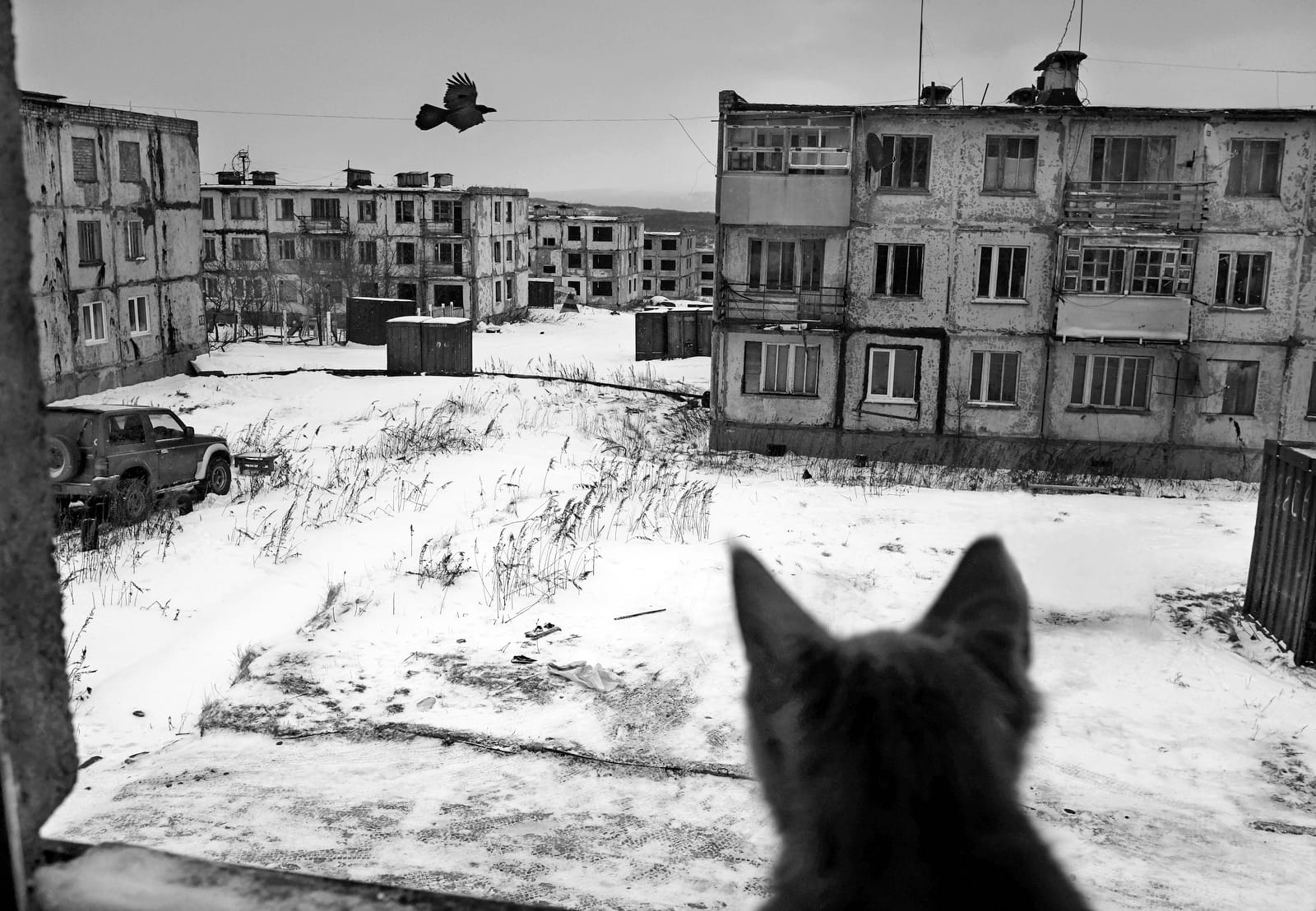
‘Here is where the homeland’s morning begins,’ advertisement billboards claim romantically, representing the power vertical from the Pacific Ocean to the Baltic Sea. The many centuries spent and methods used to colonise the islands have, however, made neither Sakhalin nor the Kuril Islands ‘our Australia’, though in both cases the land was first colonised by convicts at the same time. Why has the forced-labour-based Australia grown into an industrialized country, whereas Sakhalin and the Kurils remain ‘Calamity Islands’?
The causes are plenty but we have failed to comprehend the main one. Colonisation never be- gins with imprisonment and forced labour, but rather with men making homes for themselves on the land; never with barbed-wire-fenced camps but with freedom to develop. Then again, an island in the middle of the sea has always felt to us like an insufficiently reliable prison and life on it not quite severe a penalty for the crimes committed. This is the reason why we would build a forced-labour-island, chain people to barrows in which they moved coal, flog them with rods and deprive them of the right to as much as dream of freedom. ‘Prison is the antagonist of col- ony, and the interests of the two are inverse,’ Anton Chekhov concluded in his book of travels across the Sakhalin forced-labour colony in 1890.
The Russo-Soviet metropole, however, has at all times ignored popular sentiments, following closely its own ideology.
What are the humanitarian shifts seen over the civilisation’s technocratic period until our day? They are few. The aboriginals have become extinct or assimilated, their culture and language lost; the forced-labour island has turned into a shift-work island for the transcontinental corporations; and the prisoners and hard labourers have been replaced by shift and guest workers extracting fish, gas and oil. The islands still belong to everyone and no one, despite the politicians’ statements and rampant propaganda. Over two hundred years, the local population has formed itself through either people fleeing to the continent and back, voluntarily or forcibly, or through the ‘hectare of land’ recruitment, which hectare the state can always forfeit, should the settler fail as an efficient manager. Actual lack of freedom freedom being guaranteed by the law, violence and aggression remain the Russian conquistadors’ chief instruments.
The discoverers of Sakhalin and the Kuril Islands were – Dutch, Russian or Japanese – the sub- conscious sensation of the place being a no man’s land lingers on.
Intuitive or quite conscious, these sentiments are still found in the islanders. They mostly have no rational grounds but are intrinsic to any person, identifying, in fact, the space and time they belong to. Until people feel free on their land, in their homes, the territory will remain property of no one. In 1867, the Russians and the Japanese, surprisingly, admitted each other’s equal rights to govern the islands – neither considered them their own. The parity did not last long.
The Dutch, acknowledged as discoverers, reneged on their claims to the territories in the 18th century, having found no desired gold there. It was found by the Russians, though not before early 21st century. Island ownership remains an unresolved issue in the Russia-Japan relations, both parties being convinced of their entitlement.
Unlike other, no longer existent, empires, the Russo-Soviet one has always been based on an ‘idea’– hence ceases to exist last. An idea and, therefore, an ideology has always been at the core of Russian structures: Third Rome, world revolution, global communism and, finally, the recent attempt of a ‘Russian world’ in the neighbouring Ukraine.
Our conquistadors would discover and subjugate new lands, in which tczar’s forced-labour settlements or Soviet-era Gulag camps would subsequently emerge, as a means to colonise territories that were new or unfinhabitable. Not only the ‘empire of ideas’ that eventually reduced itself to the ‘empire of evil’ was founded on violence and hostility. Violence propelled the very human organisation that has for centuries been moulding a particular value system – the Russian Ressentiment.
Russian ressentiment is the result of millennia-long coercion and servitude, an inborn and acquired sense of hostility towards everything one views as the cause of own failures and grievances. It is always somebody else, the enemy from without, that is the culprit behind one’s humiliation and abuse, but never oneself, because one decides and governs nothing, not even own life. In losing the last shreds of identity, one has no faith in God but worships an idea personified by a tczar or a president, as well as by whatever ideology they coin.
Each individual I met seemed, when alone, nice person to me, but whenever my new acquaintances found themselves together in some ‘interest groups’, they often became monstrous in their judgements about people who were not part of their circle or did not share their views of life, national policies and national leaders.
Thus, I saw the burgeoning of a subconscious feeling of hatred the human mass produces when ever an ‘only true idea’ or ideology purporting to embrace the whole world fails.
Oleg Klimov, freelance photographer | Calamity Islands
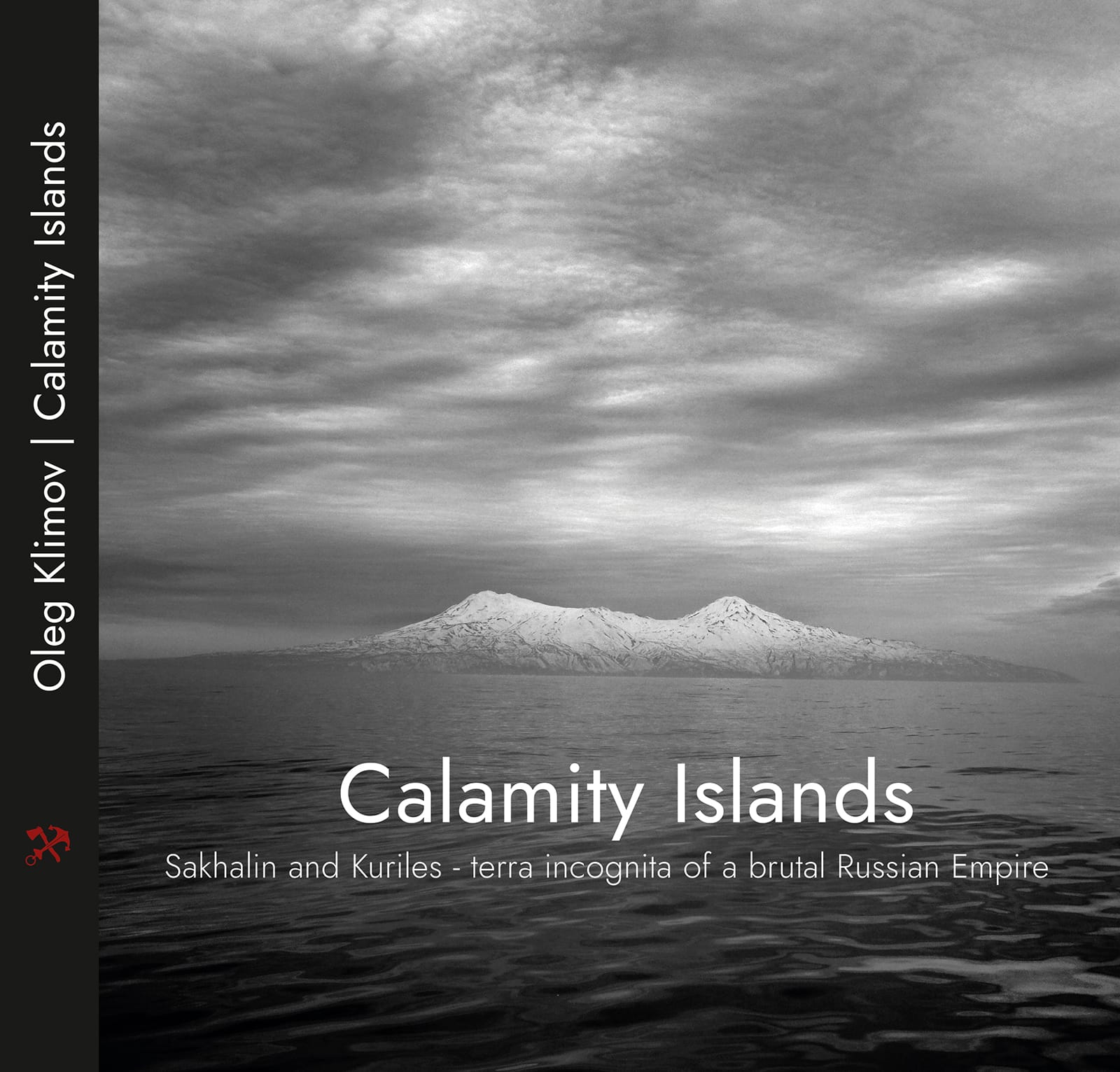
Digital edition — PDF + EPUB
Your purchase includes both formats. The PDF preserves the book’s page design; the EPUB offers an alternative for compatible reading apps. A short viewing guide is included.