
Against Innocent Images
Photography, Fear, and the Construction of Reality
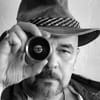
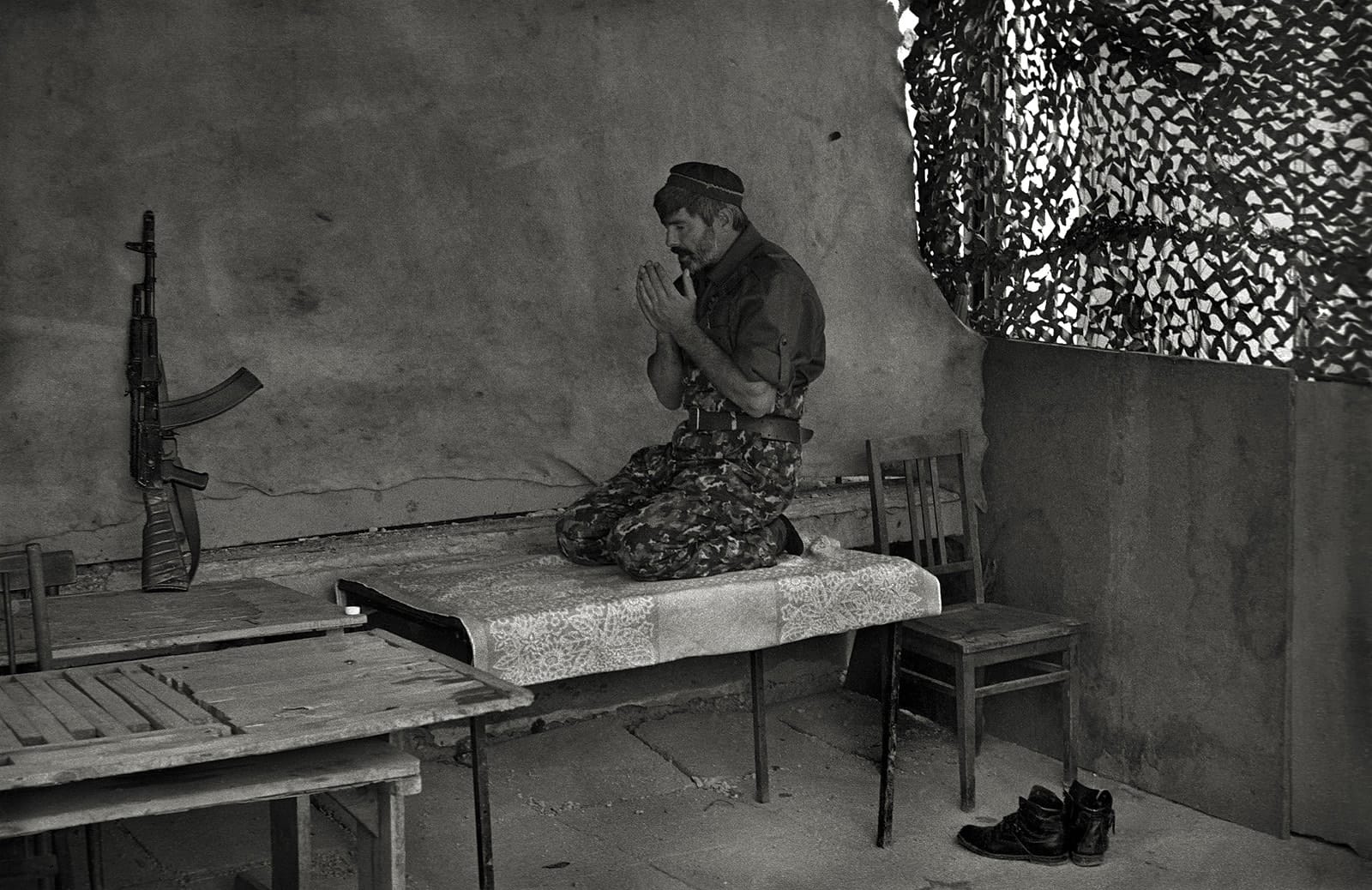
Photography has long occupied an unstable position between art, documentation, and power. It has repeatedly been pushed toward art, yet never fully accepted into the canon of “high art.” At the same time, it has been labeled a journalistic document—while reality itself was distorted through captions, montage, and, later, digital manipulation.
Today, photography exists in a paradox: it is everywhere, yet increasingly insignificant. Most contemporary photographers are destined for oblivion, not because they lack skill, but because they photograph what the crowd already sees—and often what the crowd photographs itself. If photography were allowed to replace all other forms of visual art, art would likely disappear, overwhelmed by the visual noise produced by the masses armed with cameras like soldiers with rifles.
I have long believed that the photographer in Russia resembles a figure from Soviet satire: Soldier Chonkin—a marginal, absurd character who quietly does what he loves, even if it appears useless or ridiculous. Photography becomes nothing more than embroidery if it contains only affection for the process itself or serves as empty occupation. What matters is not the act of photographing, but its ethical and social function.
When I photograph, I do not think about consequences. I look and press the shutter. I am a photojournalist. This profession does not require heroism—only open eyes. My photographs are not instructions for action; they are actions that have already taken place. They belong to the past.
Yet the moment a photograph appears on the front page of a newspaper or across a magazine spread, another process begins. The editor thinks. Not about the past, but about the future—often his own. In this moment, photography ceases to be neutral.
Under authoritarian systems, many professions become fictitious, and photojournalism is one of them. Soviet history offers a clear trajectory: under Stalin—execution; under Khrushchev—prison; under Brezhnev—psychiatric confinement. In the absence of ideology, contemporary power relies on cynicism. When forced to choose between profession and freedom, freedom must come first. Without it, photography loses its civic meaning.
I belong to a generation of photographers who entered war zones in the late 1980s and early 1990s not out of heroism, but out of historical momentum. Like many before us, we understood our time only retrospectively. One recognizes one’s own chronotope only in the future—and often too late.
At the core of photography lies fear. External fear is easy to describe: the barrel of a rifle pressed against your forehead. Internal fear is harder—it grows from memory, conscience, and doubt. Fear has creative power. It shapes images, choices, silences. Only conscience can oppose it. That is why photography so often attracts people who are either fearless—or shameless.
Alexander Rodchenko exemplifies this tension. Often celebrated as an innovator of Soviet photography, he was also deeply shaped by fear. His transition from radical avant-garde practices to state-sanctioned imagery coincided with Stalinism. The so-called “romantic” photographs of industrial achievements conceal a brutal reality: those depicted as builders of the future were frequently executed as expendable material. Rodchenko’s own phrase—Experiments for the Future—unintentionally names this violence.
In that era, there was only one true author: Stalin himself. All others—artists, photographers, writers—were reduced to apprentices. They constructed forms, but only one person manipulated real human matter. He alone was the true “constructivist,” now retrospectively described as an “effective manager.”
Fear also functioned as an editor during World War II. Soviet photographers freely used montage and staged symbolism. Captions were written without restraint. The famous photograph of the flag over the Reichstag by Yevgeny Khaldei illustrates this clearly. When a reader noticed that one of the soldiers wore multiple watches, Khaldei was dismissed. The image survived—retouched, corrected, purified. Later, Khaldei admitted that the flag itself was a red tablecloth he carried with him.
Reality, however, always leaks through fiction. No matter how carefully constructed, images eventually betray their conditions of production.
Despite technological change, little has changed in essence. Photography still destabilizes rather than informs. When it works, it produces anxiety. Today, media no longer merely trade in images or illusions—they trade in fear, converting it into a commodity transferable across borders and contexts.
In a globalized information space, violence in one country generates fear in another. Often, photographs alone are insufficient. Captions do the rest. “Victims of bombing in Georgia” or “in Ossetia”—the same image, different moral frameworks. This is what editors call “shaping public opinion.” In reality, it is a continuation of earlier propaganda practices under new technological conditions.
Mass media do not operate on facts alone. Facts must conform to a moral standard. Responsibility must be assigned. Victims must be shown; perpetrators often remain invisible. Conflict, moralized for social cohesion, becomes the engine of visual media.
At some point, I stopped photographing wars and conflicts. Not only because it led to personal degradation, but because I no longer believe that photography can stop violence or humanize society. Photographs do not prevent war. They document what has already happened.
I do not photograph landscapes or flowers. I am not interested in photographing what God created—I have never met Him. I photograph people. I meet them every day. They are always different.
Today, photographers in newsrooms are increasingly reduced to technical operators—closer to surveillance cameras than authors. This seems inevitable. Photography records the past. The future cannot be photographed. It can only be imagined. Surveillance cameras have no fear—and no conscience.
Oleg Klimov
From a photographer’s diary